LLM Observability
Trace every layer of a Python AI application, from the HTTP request through the agent pipeline to each model call and database query, in one OpenTelemetry trace. The model calls are traced by the official OpenTelemetry GenAI packages for the OpenAI, Anthropic and Google Gen AI SDKs; this guide shows what they record and how to add what they cannot know.
An LLM call is more than an HTTP request. It has a model, token counts, a cost, and sometimes a quality score, and it belongs to an agent and a business operation. The GenAI packages record the model and the tokens on a model call span. The application adds the rest: which agent made the call, which customer or campaign it served, what it cost, whether it was retried or fell back to another provider, and how its output scored.
The example is a sales intelligence pipeline: a LangGraph graph of five nodes that research prospects in Postgres and enrich, score, draft and evaluate outreach with model calls, behind a FastAPI endpoint.
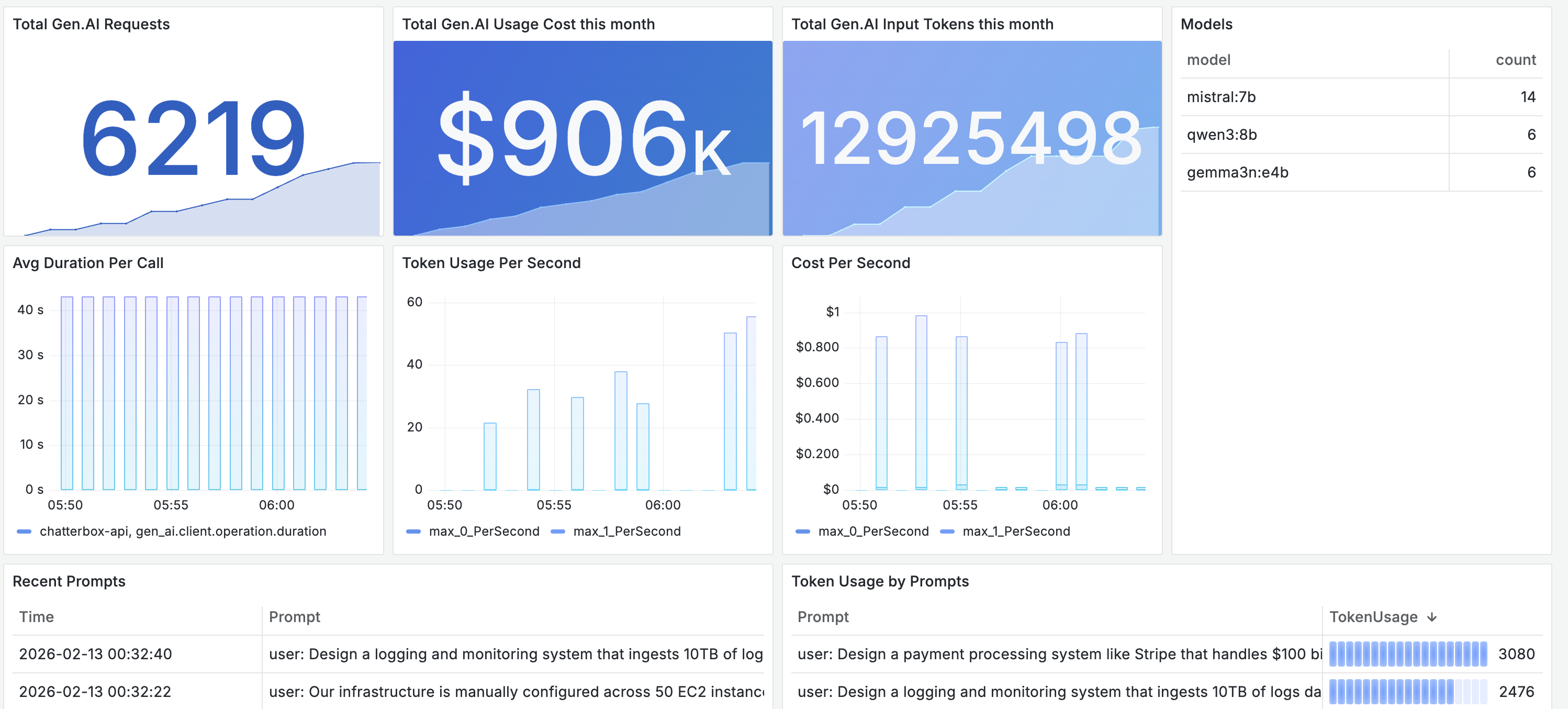
Install opentelemetry-instrumentation-genai-openai, -genai-anthropic and
opentelemetry-instrumentation-google-genai, and call instrument() on each
after setting up the tracer provider. Add agent and business context to their
spans in a span processor, cost and PII scrubbing in a span exporter, and
retry, fallback and cost counters in your client. Keep content capture at
no_content.
Storing and querying these traces at production volume is what base14 Scout does. Check out Scout LLM Observability.
Overview
- Trace OpenAI, Anthropic and Gemini calls with the official GenAI packages.
- Put the agent, the business ID and the real provider on the packages' spans with a span processor.
- Add cost and scrub captured content with a span exporter.
- Record retry, fallback, error and cost metrics, with one span per attempt.
- Trace the agent pipeline and record evaluation results.
- Deploy with Docker Compose and a collector that exports to base14 Scout.
Who This Guide Is For
- AI/ML engineers building LLM features who need to see model, token, cost and quality per call.
- Backend developers adding model calls to an existing service who want them in the same trace as HTTP and database work.
- Platform teams standardizing AI observability on the OpenTelemetry GenAI conventions.
- Teams moving from LangSmith, Weights & Biases or Helicone to an open standard.
Signals
| Signal | What the instrumentation emits | What the example adds |
|---|---|---|
| Traces | chat {model} spans from the GenAI packages, generate_content {model} for Google; FastAPI and SQLAlchemy spans. | Agent, business ID, provider and cost on chat spans; pipeline, agent and per-item spans; a retrieval span; provider_fallback and gen_ai.evaluation.result events. |
| Metrics | gen_ai.client.token.usage and gen_ai.client.operation.duration. | base14.gen_ai.cost, .retry.count, .fallback.count, .error.count and .evaluation.score. |
| Logs | None. | Trace and span IDs on log lines through the logging instrumentation. |
Prerequisites
- Python 3.10 or later. The example uses 3.14.
- A model the SDKs can reach. The example uses Ollama with
qwen3.5:9Bthrough its OpenAI-compatible endpoint, which needs no API key; Anthropic, OpenAI and Google are configurable. - An OpenTelemetry Collector. See Docker Compose Setup for local development and Kubernetes Helm Setup for production.
Compatibility Matrix
| Component | Version in the example |
|---|---|
opentelemetry-instrumentation-genai-openai | 1.2b0, for openai>=1.26.0,<4 |
opentelemetry-instrumentation-genai-anthropic | 1.2b0, for anthropic>=0.51.0,<2 |
opentelemetry-instrumentation-google-genai | 1.2b0, for google-genai>=1.32.0,<3 |
openai | 3.7.0 |
anthropic | 0.125.0 |
google-genai | 2.21.0 |
opentelemetry-sdk, opentelemetry-api | 1.45.0 |
opentelemetry-instrumentation-fastapi, -sqlalchemy, -httpx, -logging | 0.66b0 |
langgraph | 1.2.11 |
| Python | 3.14 |
| OpenTelemetry Collector Contrib | 0.161.0 |
| Example | ai-sales-intelligence |
Last verified 2026-10-06: the example's verify script passed against Ollama
qwen3.5:9B through the OpenAI package. The GenAI packages are beta and
always emit the latest experimental conventions, so pin exact versions and
re-check the spans after each upgrade.
The Unified Trace
One request to run a campaign produces one trace:
POST /campaigns/{campaign_id}/run       (FastAPI)
├─ SELECT                               (SQLAlchemy)
├─ pipeline.run
│  ├─ invoke_agent research
│  │  └─ retrieval prospects_fts
│  │     └─ SELECT                      (SQLAlchemy)
│  ├─ invoke_agent enrich
│  │  └─ enrich.prospect
│  │     └─ chat qwen3.5:9B             (OpenAI package)
│  ├─ invoke_agent score
│  │  └─ score.prospect
│  │     └─ chat qwen3.5:9B
│  ├─ invoke_agent draft
│  │  └─ draft.email
│  │     └─ chat qwen3.5:9B
│  └─ invoke_agent evaluate
│     └─ evaluate.draft
│        └─ chat qwen3.5:9B
└─ INSERT                               (SQLAlchemy)
Three kinds of spans work together:
- Instrumentation spans, with no code: FastAPI requests, SQLAlchemy queries, and a model call span for every SDK call from the GenAI packages.
- Application spans:
pipeline.run, aninvoke_agentspan per graph node, and one span per prospect or draft. - Enrichment on instrumentation spans: the agent, the campaign ID, the
provider and the cost, added to the packages'
chatspans without a second span.
Installation
- pip
- uv
pip install \
  opentelemetry-sdk \
  opentelemetry-exporter-otlp-proto-http \
  opentelemetry-instrumentation-genai-openai \
  opentelemetry-instrumentation-genai-anthropic \
  opentelemetry-instrumentation-google-genai \
  opentelemetry-instrumentation-fastapi \
  opentelemetry-instrumentation-sqlalchemy \
  opentelemetry-instrumentation-logging
uv add \
  opentelemetry-sdk \
  opentelemetry-exporter-otlp-proto-http \
  opentelemetry-instrumentation-genai-openai \
  opentelemetry-instrumentation-genai-anthropic \
  opentelemetry-instrumentation-google-genai \
  opentelemetry-instrumentation-fastapi \
  opentelemetry-instrumentation-sqlalchemy \
  opentelemetry-instrumentation-logging
Install only the GenAI packages for the SDKs you use. They are beta, from the
OpenTelemetry GenAI SIG, and move as one release line: bump them together.
opentelemetry-instrumentation-genai-openai continues the package published as
opentelemetry-instrumentation-openai-v2.
Instrumenting the Model SDKs
Set up the providers first, then instrument each SDK:
    trace_provider = TracerProvider(resource=resource)
    trace_provider.add_span_processor(LLMCallAttributesProcessor())
    trace_provider.add_span_processor(
        BatchSpanProcessor(
            GenAISpanExporter(
                OTLPSpanExporter(endpoint=f"{settings.otel_exporter_otlp_endpoint}/v1/traces")
            )
        )
    )
    trace.set_tracer_provider(trace_provider)
    from opentelemetry.instrumentation.genai.anthropic import AnthropicInstrumentor
    from opentelemetry.instrumentation.genai.openai import OpenAIInstrumentor
    from opentelemetry.instrumentation.google_genai import GoogleGenAiSdkInstrumentor

    OpenAIInstrumentor().instrument()
    AnthropicInstrumentor().instrument()
    GoogleGenAiSdkInstrumentor().instrument()
Every SDK call then gets a chat {model} CLIENT span (generate_content {model} for the Google Gen AI SDK) with gen_ai.operation.name,
gen_ai.provider.name, gen_ai.request.model, gen_ai.request.temperature,
gen_ai.request.max_tokens, gen_ai.response.model, gen_ai.response.id,
gen_ai.response.finish_reasons, gen_ai.usage.input_tokens,
gen_ai.usage.output_tokens and server.address, and the
gen_ai.client.token.usage and gen_ai.client.operation.duration histograms
record each call. server.port is left out when it is the default 443, and
Anthropic's end_turn is reported as the convention's stop.
The OpenAI package also covers OpenAI-compatible endpoints, such as Ollama's
/v1, Azure OpenAI, Groq and DeepSeek, when called through the OpenAI SDK.
Adding Application Context
The packages do not know which agent made a call or which business operation it served. Set that context around the call:
        call = LLMCallAttributes(
            provider=PROVIDER_SEMCONV_NAMES[provider],
            agent_name=agent_name,
            campaign_id=campaign_id,
        )
        try:
            with llm_call_attributes(call):
                response = await llm_provider.generate(
                    model=model,
                    system=system,
                    prompt=prompt,
                    temperature=temperature,
                    max_tokens=max_tokens,
                )
llm_call_attributes stores it in a context variable, and a span processor
copies it onto the package's span when the span starts:
class LLMCallAttributesProcessor(SpanProcessor):
    """Adds the agent, the campaign and the provider to model call spans as they start."""

    def on_start(self, span: Span, parent_context: otel_context.Context | None = None) -> None:
        call = _llm_call.get()
        if call is None or not _is_genai_instrumentation_span(span):
            return
        attributes: dict[str, AttributeValue] = {"gen_ai.provider.name": call.provider}
        if call.agent_name:
            attributes["gen_ai.agent.name"] = call.agent_name
        if call.campaign_id:
            attributes["base14.campaign_id"] = call.campaign_id
        span.set_attributes(attributes)
_is_genai_instrumentation_span checks the span's instrumentation scope, so
only the packages' spans are touched. Setting gen_ai.provider.name here also
corrects the OpenAI package, which reports openai for any endpoint the SDK
reaches, Ollama's included. Attributes set at span start win over the ones the
package set when it created the span, and the package does not rewrite the
provider when the span ends.
Custom attributes carry a base14. prefix, because the conventions reserve
gen_ai.*.
Cost
Cost needs the token counts, which exist only once the call has finished, and a finished span's attributes cannot be changed. A span exporter wraps the OTLP exporter and rebuilds the spans it adds to:
def _derived_attributes(span: ReadableSpan) -> dict[str, AttributeValue]:
    attributes = span.attributes or {}
    if attributes.get("gen_ai.operation.name") not in MODEL_CALL_OPERATIONS:
        return {}
    derived: dict[str, AttributeValue] = {}
    model = attributes.get("gen_ai.response.model") or attributes.get("gen_ai.request.model")
    if model is not None:
        derived[COST_ATTRIBUTE] = calculate_cost(
            str(model),
            _as_token_count(attributes.get("gen_ai.usage.input_tokens")),
            _as_token_count(attributes.get("gen_ai.usage.output_tokens")),
        )
    for key in CONTENT_ATTRIBUTES:
        value = attributes.get(key)
        if isinstance(value, str):
            derived[key] = scrub_pii(value)
    return derived
Prices come from _shared/pricing.json, in USD per million tokens. A model
missing from it costs 0, which covers every local Ollama model.
For dashboards, the client also records a base14.gen_ai.cost counter with
the agent and campaign, which the packages' metrics do not carry:
def _record_cost(
    provider: LLMProvider,
    model: str,
    response: LLMResponse,
    agent_name: str | None,
    campaign_id: str | None,
) -> None:
    attributes: dict[str, Any] = {
        "gen_ai.operation.name": "chat",
        "gen_ai.provider.name": PROVIDER_SEMCONV_NAMES[provider],
        "gen_ai.request.model": model,
        "gen_ai.response.model": response.model,
    }
    if agent_name:
        attributes["gen_ai.agent.name"] = agent_name
    if campaign_id:
        attributes["base14.campaign_id"] = campaign_id
    _cost_counter.add(
        calculate_cost(response.model, response.input_tokens, response.output_tokens),
        attributes,
    )
Content Capture and PII
The packages capture no content by default.
OTEL_INSTRUMENTATION_GENAI_CAPTURE_MESSAGE_CONTENT takes no_content,
span_only, event_only or span_and_event. true and false are not
valid: the packages log a warning and capture nothing. The mode is read once,
when instrument() runs.
With span_only, chat spans carry gen_ai.input.messages,
gen_ai.output.messages and gen_ai.system_instructions as JSON. The span
exporter above scrubs emails, phone numbers, LinkedIn URLs and card numbers
from them before export. Two limits:
- Events are not scrubbed.
event_onlyandspan_and_eventemit content as log events, which a span exporter does not see. - A completion hook cannot scrub. It runs after the content is set on the
span. Use it to upload content to storage instead, with
OTEL_INSTRUMENTATION_GENAI_COMPLETION_HOOK=upload.
Treat the scrubber as a backstop. Decide what may leave your boundary before turning capture on in production.
Retry and Fallback
Retry in the application, not in the SDK. Both the OpenAI and Anthropic SDKs
retry inside a single call by default, and the package records that call as
one span, so a retry neither shows in the trace nor in your counters. Build
the clients with max_retries=0:
        # tenacity in generate() is the only retry layer, so each attempt is one span.
        self._client = AsyncAnthropic(api_key=api_key, max_retries=0)
Each attempt is then its own chat span. A failed attempt's span has error
status, the recorded exception, and error.type set to the SDK's exception
class, such as RateLimitError. Count retries in the retry library's hook:
def _on_retry(retry_state: RetryCallState) -> None:
    provider = "unknown"
    if retry_state.args and hasattr(retry_state.args[0], "provider_name"):
        provider = PROVIDER_SEMCONV_NAMES[retry_state.args[0].provider_name]

    error_type = "unknown"
    if retry_state.outcome and retry_state.outcome.exception():
        error_type = type(retry_state.outcome.exception()).__qualname__

    _retry_counter.add(
        1,
        {
            "gen_ai.provider.name": provider,
            "error.type": error_type,
            "base14.retry.attempt": retry_state.attempt_number,
        },
    )
When the primary provider's retries run out, the client switches to the fallback provider and records the switch on the calling span, which does not fail if the fallback answers:
    def _record_fallback(self, provider: LLMProvider, exc: Exception) -> None:
        """Record the provider switch on the calling span without failing it."""
        error_type = type(exc).__qualname__
        attrs = {
            "gen_ai.provider.name": PROVIDER_SEMCONV_NAMES[provider],
            "base14.gen_ai.fallback.provider": PROVIDER_SEMCONV_NAMES[self._fallback_provider],
            "error.type": error_type,
        }

        span = trace.get_current_span()
        span.record_exception(exc)
        span.add_event("provider_fallback", attributes=attrs)
        span.set_attribute("gen_ai.fallback.triggered", True)

        _fallback_counter.add(1, attrs)
Agent Pipeline Spans
The example's graph nodes are plain functions, so each gets an invoke_agent {node} span by hand, inside a pipeline.run span, and nodes that handle many
items open one span per item. A failed item marks its own span failed while
the node goes on. The LangGraph guide
covers this in detail.
If your agents run on a framework with its own telemetry, use that instead of hand-written agent spans: LangChain, Pydantic AI, Strands Agents, Google ADK, Microsoft Agent Framework and the OpenAI Agents SDK each have a page. Do not combine a framework's model spans with an SDK package's on the same call; each call would appear twice.
Evaluation and Quality
The evaluate node scores each draft with a model call and records the result
as a gen_ai.evaluation.result event on the draft's span:
                espan.add_event(
                    "gen_ai.evaluation.result",
                    attributes={
                        "gen_ai.evaluation.name": "email_quality",
                        "gen_ai.evaluation.score.value": score,
                        "gen_ai.evaluation.score.label": "passed" if passed else "failed",
                        "gen_ai.evaluation.explanation": data.get("feedback", "")[:200],
                    },
                )
A base14.gen_ai.evaluation.score histogram, normalized to 0-1, carries the
same name and label for dashboards. The conventions define the event but no
evaluation metric, hence the prefix.
SDKs Without a Package
Where no GenAI package exists, such as go-openai in Go or async-openai in
Rust, write the chat {model} span by hand with the same attributes the
packages set, and record the two gen_ai.client.* histograms yourself. The
Rust LLM Observability guide shows the pattern.
In Python, check the
opentelemetry-python-genai
repository first; a hand-written span next to a package span records the call
twice.
Known Gaps
As of the OpenAI, Anthropic and Google GenAI packages 1.2b0, verified 2026-10-06:
gen_ai.provider.nameisopenaifor OpenAI-compatible endpoints. Correct it on spans in a span processor; thegen_ai.client.*metric points keepopenai.- No HTTP client span for OpenAI calls. The OpenAI SDK 3.x sends through
httpx2, whichopentelemetry-instrumentation-httpxdoes not patch. - No application context on spans or metrics. Add it to spans in a span processor. The token and duration metrics carry the provider and model only; record your own counter for per-agent or per-customer views.
- SDK retries are invisible. They happen inside one span. Turn them off when the application retries.
- Content capture takes mode values only, read once at
instrument(). - Content events are not scrubbed by a span exporter.
What to Look For in Scout
Follow one campaign end to end
Search spans by base14.campaign_id. The trace holds the HTTP span, the
pipeline, each node, each item and each model call, with the database queries
in between.
Find failed model calls and why
Filter chat spans on error status and group by error.type. A retry shows
as a failed chat span followed by a successful one under the same item span;
a fallback adds a provider_fallback event to the calling span. Plot
base14.gen_ai.retry.count, .fallback.count and .error.count for the
rates.
Read tokens and cost by agent
Sum gen_ai.usage.input_tokens, gen_ai.usage.output_tokens and
base14.gen_ai.cost_usd on chat spans grouped by gen_ai.agent.name, or
sum the base14.gen_ai.cost counter by the same attribute.
Read tokens by model
Plot gen_ai.client.token.usage split by gen_ai.token.type and grouped by
gen_ai.request.model.
Track output quality
Plot base14.gen_ai.evaluation.score by gen_ai.evaluation.score.label, and
read the gen_ai.evaluation.result events for the explanation.
Production Patterns
- Keep content capture at
no_contentfor real data. Turn onspan_onlywhere you need it, with a scrubbing exporter. - Turn off SDK retries when the application retries.
- Add context in a processor, not a second span. A hand-written span next to a package span doubles every call.
- Keep the price table current. A missing model records 0.
- Pin the GenAI packages and re-check the spans after each upgrade; they are beta and always emit the latest experimental conventions.
- Batch exports and send through a collector, which holds the Scout credentials.
Production Configuration
Environment Variables
OTEL_SERVICE_NAME=my-ai-service
OTEL_EXPORTER_OTLP_ENDPOINT=http://otel-collector:4318
OTEL_INSTRUMENTATION_GENAI_CAPTURE_MESSAGE_CONTENT=no_content
SCOUT_ENVIRONMENT=production

LLM_PROVIDER=anthropic
LLM_MODEL_CAPABLE=claude-sonnet-4-6
ANTHROPIC_API_KEY=...

FALLBACK_PROVIDER=google
FALLBACK_MODEL=gemini-3-flash-preview
GOOGLE_API_KEY=...
The GenAI packages do not read OTEL_SEMCONV_STABILITY_OPT_IN; they always
emit the latest experimental conventions.
OpenTelemetry Collector Configuration
extensions:
  health_check:
    endpoint: 0.0.0.0:13133
  oauth2client:
    client_id: ${SCOUT_CLIENT_ID}
    client_secret: ${SCOUT_CLIENT_SECRET}
    token_url: ${SCOUT_TOKEN_URL}
    endpoint_params:
      audience: b14collector
    timeout: 10s

receivers:
  otlp:
    protocols:
      grpc:
        endpoint: 0.0.0.0:4317
      http:
        endpoint: 0.0.0.0:4318

processors:
  memory_limiter:
    check_interval: 1s
    limit_mib: 512
    spike_limit_mib: 128
  filter/noisy:
    error_mode: ignore
    traces:
      span:
        - 'IsMatch(name, ".*/health.*")'
  batch:
    timeout: 10s
    send_batch_size: 1024
    send_batch_max_size: 2048
  attributes:
    actions:
      - key: deployment.environment.name
        value: ${SCOUT_ENVIRONMENT}
        action: upsert
      - key: environment
        value: ${SCOUT_ENVIRONMENT}
        action: upsert

exporters:
  otlp_http/b14:
    endpoint: ${SCOUT_ENDPOINT}
    auth:
      authenticator: oauth2client
    compression: gzip
    timeout: 30s
    retry_on_failure:
      enabled: true
      initial_interval: 1s
      max_interval: 30s
      max_elapsed_time: 300s
  debug:
    verbosity: detailed

service:
  extensions: [health_check, oauth2client]
  pipelines:
    traces:
      receivers: [otlp]
      processors: [memory_limiter, filter/noisy, attributes, batch]
      exporters: [otlp_http/b14, debug]
    metrics:
      receivers: [otlp]
      processors: [memory_limiter, attributes, batch]
      exporters: [otlp_http/b14, debug]
    logs:
      receivers: [otlp]
      processors: [memory_limiter, attributes, batch]
      exporters: [otlp_http/b14, debug]
Drop the debug exporter once you are past first setup.
Docker Compose Deployment
services:
  app:
    build: .
    ports:
      - "8000:8000"
    environment:
      - DATABASE_URL=postgresql+asyncpg://postgres:postgres@postgres:5432/mydb
      - OTEL_SERVICE_NAME=my-ai-service
      - OTEL_EXPORTER_OTLP_ENDPOINT=http://otel-collector:4318
      - OTEL_INSTRUMENTATION_GENAI_CAPTURE_MESSAGE_CONTENT=${OTEL_INSTRUMENTATION_GENAI_CAPTURE_MESSAGE_CONTENT:-no_content}
      - ANTHROPIC_API_KEY=${ANTHROPIC_API_KEY}
      - SCOUT_ENVIRONMENT=${SCOUT_ENVIRONMENT:-development}
    depends_on:
      postgres:
        condition: service_healthy
      otel-collector:
        condition: service_started

  postgres:
    image: postgres:18
    environment:
      POSTGRES_DB: mydb
      POSTGRES_USER: postgres
      POSTGRES_PASSWORD: postgres
    healthcheck:
      test: ["CMD-SHELL", "pg_isready -U postgres"]
      interval: 5s
      timeout: 5s
      retries: 5

  otel-collector:
    image: otel/opentelemetry-collector-contrib:0.161.0
    command: ["--config=/etc/otel-collector-config.yaml"]
    volumes:
      - ./otel-collector-config.yaml:/etc/otel-collector-config.yaml:ro
    ports:
      - "4317:4317"
      - "4318:4318"
      - "13133:13133"
    environment:
      - SCOUT_CLIENT_ID=${SCOUT_CLIENT_ID:-}
      - SCOUT_CLIENT_SECRET=${SCOUT_CLIENT_SECRET:-}
      - SCOUT_TOKEN_URL=${SCOUT_TOKEN_URL:-https://auth.base14.io/oauth/token}
      - SCOUT_ENDPOINT=${SCOUT_ENDPOINT:-https://collector.base14.io}
      - SCOUT_ENVIRONMENT=${SCOUT_ENVIRONMENT:-development}
Troubleshooting
Verify telemetry is working
The collector's debug exporter prints each span. After a request:
docker compose logs otel-collector --since=2m | grep -E "Name +: (chat|invoke_agent)"
Every chat span should come from a scope named
opentelemetry.instrumentation.genai.* or
opentelemetry.instrumentation.google_genai. The example's
scripts/verify-scout.sh checks that, and that no chat span names Ollama as
openai.
No chat spans
The instrumentors did not run, or ran before the tracer provider was set. In tests, a mocked SDK class produces no spans; replace the SDK's HTTP transport instead.
Two chat spans per call
Both a hand-written span and a package span, or a framework's span and an SDK package's span, cover the same call. Keep one.
No content with capture set to true
Use span_only. The packages accept mode values only.
Token counts are zero or missing
The call failed, or the provider returned no usage. Check the span's status first; only a call that returned a response carries token counts.
FAQ
Is there an official OpenTelemetry instrumentation for the OpenAI Python SDK?
Yes. opentelemetry-instrumentation-genai-openai, from the OpenTelemetry
GenAI SIG, traces the OpenAI Python SDK, including chat completions, the
Responses API and embeddings, and OpenAI-compatible endpoints reached through
it. It continues the package published as
opentelemetry-instrumentation-openai-v2.
How do I trace Anthropic and Gemini calls with OpenTelemetry?
Install opentelemetry-instrumentation-genai-anthropic and
opentelemetry-instrumentation-google-genai, and call instrument() on
AnthropicInstrumentor and GoogleGenAiSdkInstrumentor after setting up the
tracer provider.
How do I add my own attributes to the GenAI packages' spans?
Use a span processor. Its on_start runs when the package creates the span,
before the call, so attributes set there stay on the span. Pass the values in
through a context variable set around the call.
How do I track LLM cost per agent with OpenTelemetry?
Add a cost attribute to each finished chat span in a span exporter, from the
token counts and a price table, and record a cost counter in your client with
the agent's name.
Can I see prompts and completions in traces?
Yes, with OTEL_INSTRUMENTATION_GENAI_CAPTURE_MESSAGE_CONTENT=span_only. Scrub
them in a span exporter before export.
Does OpenTelemetry record LLM retries?
Only those your application makes. An SDK's own retries happen inside one
span. Set max_retries=0 on the client and retry in the application, and
each attempt is a span.
What if my agent framework has its own tracing?
Use it, and do not add an SDK package for the same calls. See the framework pages under Agent Pipeline Spans.
What's Next?
Advanced Topics
- LangGraph Instrumentation - Node spans for a graph of plain functions.
- AI Agent Observability - Agent timelines, conversation IDs and tool calls.
- Rust LLM Observability - Hand-written GenAI spans where no package exists.
Scout Platform Features
- Creating Alerts - Alert on cost spikes, error rates, or quality drops.
- Dashboard Creation - Build token, cost and quality dashboards.
Deployment and Operations
- Docker Compose Setup - Local development with the collector.
- Kubernetes Helm Setup - Production collector deployment.
Complete Example
The code on this page comes from
python/ai-sales-intelligence.
src/sales_intelligence/
├── telemetry.py         # providers, exporters, SDK instrumentation
├── genai_spans.py       # context, provider, cost and scrubbing on chat spans
├── llm.py               # SDK clients, retries, fallback, counters
├── pricing.py           # price table from _shared/pricing.json
├── pii.py               # scrubbing patterns
├── graph.py             # LangGraph pipeline and node spans
├── agents/              # research, enrich, score, draft, evaluate
└── main.py              # FastAPI app
git clone https://github.com/base-14/examples.git
cd examples/python/ai-sales-intelligence
cp .env.example .env
ollama pull qwen3.5:9B
docker compose up -d --build
./scripts/verify-scout.sh