base14 Product Engineering Principles
At base14, everyone is always
- shipping
- forward deployed
- helping customers
- on production support
At base14, everyone is always
What makes recovery slower — and what disciplined, observable teams do differently.
In reliability engineering, MTTR (Mean Time to Recovery) is one of the clearest indicators of how mature a system — and a team — really is. It measures not just how quickly you fix things, but how well your organization detects, communicates, and learns from failure.
Every production incident is a test of the system's design, the team's reflexes, and the clarity of their shared context. MTTR rises when friction builds up in those connections — between tools, roles, or data. It falls when context flows freely and decisions move faster than confusion.

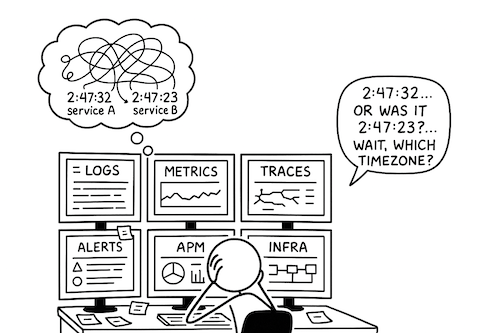
Last month, I watched a senior engineer spend three hours debugging what should have been a fifteen-minute problem. The issue wasn't complexity—it was context switching between four different monitoring tools, correlating timestamps manually, and losing their train of thought every time they had to log into yet another dashboard. If this sounds familiar, you're not alone. This is the hidden tax most engineering teams pay without realizing there's a better way.

the·a·tre (also the·a·ter) /ˈθiːətər/ noun
: the performance of actions or behaviors for appearance rather than substance; an elaborate pretense that simulates real activity while lacking its essential purpose or outcomes
Example: "The company's security theatre gave the illusion of protection without addressing actual vulnerabilities."
Your organization has invested millions in observability tools. You have dashboards for everything. Your teams dutifully instrument their services. Yet when incidents strike, engineers still spend hours hunting through disparate systems, correlating timestamps manually, and guessing at root causes. When the CEO forwards a customer complaint asking "are we down?", that's when the dev team gets to know about incidents.